藝術家做為民族誌學者? The Artist as Ethnographer?

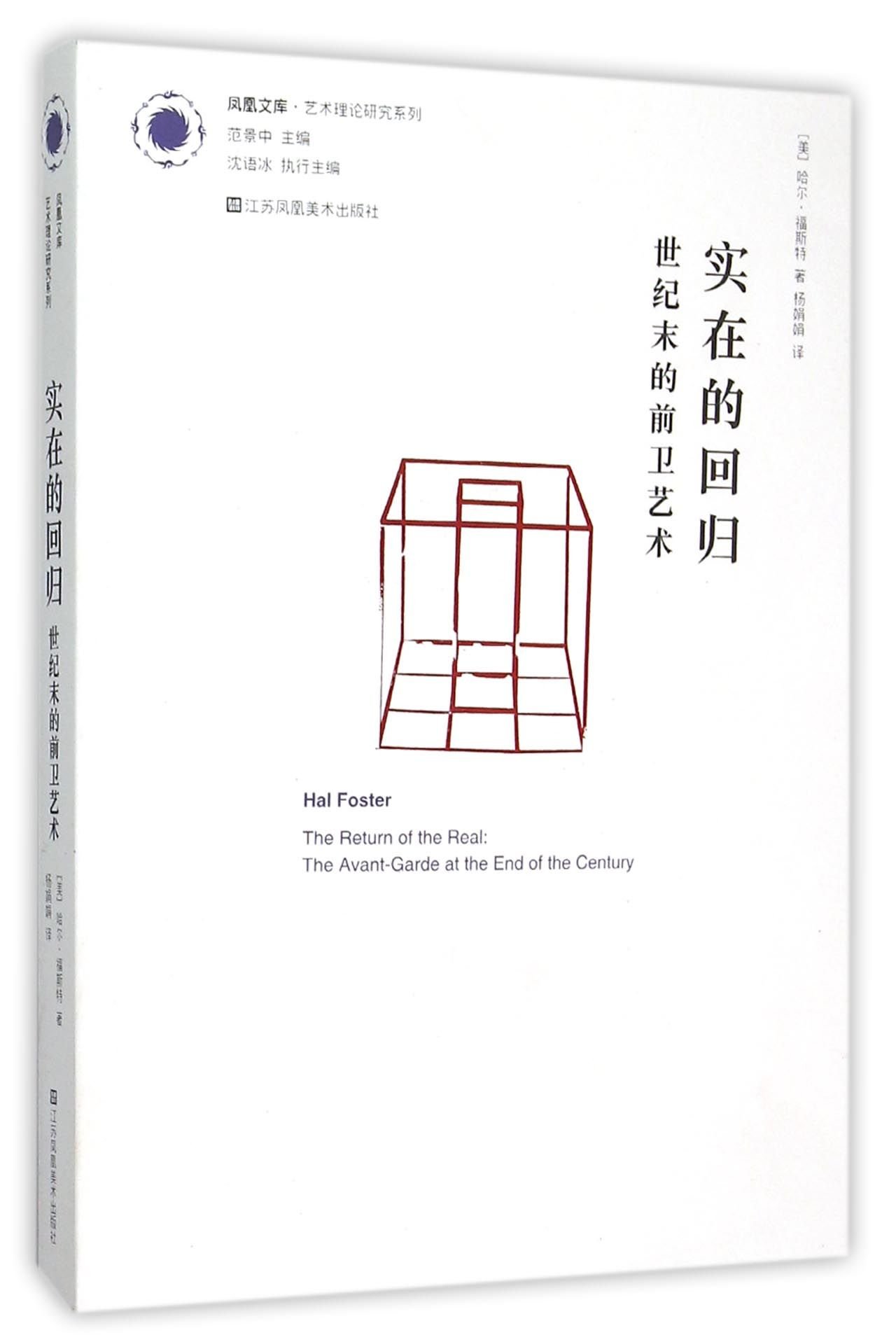
左圖為The Return of the Real
右圖為中譯本封面-實在的回歸
藝評家Hal Foster1996年出版的The Return of the Real,此處僅翻譯其中一章,
開始囉:
開始囉:
The Artist as Ethnographer? 藝術家做為民族誌學者?
My title is meant to evoke "The Author as Producer," the text of which Walter Benjamin first presented at the Institute for the Study of Fascism in Paris in April 1934. There, under the influence of Berthold Brecht and Russian revolutionary culture, Benjamin (1978) called on the artist on the left "to side with the proletariat."l In vanguard Paris in April 1934 this call was not radical; the approach, however, was. For Benjamin urged the "advanced" artist to intervene, like the revolutionary worker, in the means of artistic production-to change the "techniques" of traditional media, to transform the "apparatus" of bourgeois culture. A correct "tendency" was not enough; that was to assume a place "beside the proletariat." And "what kind of place is that?" Benjamin asked, in lines that still scathe. "That of a benefactor, of an ideological patron-an impossible place."
我的標題是為了喚起文章「作者為生產者」,而它是Walter Benjamin在1934年4月首次向巴黎法西斯學院提交的文本。在Berthold Brecht和俄國革命文化的影響下,班雅明(1978)呼籲左派藝術家應該「與無產階級站在一起」。在1934年4月的巴黎先鋒派中,這種呼籲並非特別基進;然而,因為班雅明敦促“前衛”藝術家像革命工人一樣,這種方法是, 以藝術生產的方式干預 -改變傳統媒體的「技術」,改造資產階級文化的“器具”。然而只有正確的「傾向」是不夠的; 必須在「無產階級旁邊」佔據一席之地。 而「那是什麼樣的地方?」 班雅明問道,仍然散落著。 「那是一個恩人、一個意識形態的贊助人 - 一個不可能的地方。」
Today there is a related paradigm in advanced art on the left: the artist as ethnographer. The object of contestation remains, at least in part, the bourgeois institution of autonomous art, its exclusionary definitions of art, audience, identity. But the subject of association has changed: it is now the cultural and! or ethnic other in whose name the artist often struggles. And yet, despite this shift, basic assumptions with the old productivist model persist in the new quasi-anthropological paradigm. First, there is the assumption that the site of artistic transformation is the site of political transformation, and, more, that this site is always located elsewhere, in the field of the other: in the productivist model, with the social other, the exploited proletariat; in the quasi-anthropological model, with the cultural other, the oppressed postcolonial, subaltern, or subcultural. Second, there is the assumption that this other is always outsideJ and, more, that this alterity is the primary point of subversion of dominant culture. Third, there is the assumption that if the invoked artist is not perceived as socially and!or culturally other, he or she has but limited access to this transformative alterity, and, more, that if he or she is perceived as other, he or she has automatic access to it. Taken together, these three assumptions lead to another point of connection with the Benjamin account of the author as producer: the danger, for the artist as ethnographer, of "ideological patronage."2
今天左派的前衛藝術有一個相關的範例:藝術家作為民族誌學者。 爭論的對象始終存在著。至少部分地依賴於自治藝術的資產階級機構,其對藝術、觀眾、身份的排他性定義。
但是結社的主題發生了變化:現在是文化和!或是民族的他者姓名是藝術家經常掙扎的。然而,儘管有這種轉變,舊的生產主義模式的基本假設仍然存在於新的準人類學範式中。首先,假設藝術轉型的場所是政治轉型的場所,更重要的是,這個場所總是位於其他地方,在另一個領域:在生產主義模式中,與社會他者,被剝削的無產階級;在準人類學模型中,與文化他者,被壓迫的後殖民,次要或亞文化。其次,假設另一個總是在外面,而且更多的是,這種變化是顛覆主流文化的主要觀點。 第三,假設如果被調用的藝術家不被視為社交和/或文化上的他者,他或她卻是limited只能獲得這種變形的異己,而且,如果他或她被視為他人,他或她她可以automatic訪問它。總而言之,這三個假設導致另一個與班雅明對作者作為生產者的描述的關聯點:作為民族誌學者的藝術家會發生「贊助意識形態」的危險。
A strict Marxist might question this quasi-anthropological paradigm in art because it tends to displace the problematic of class and capitalist exploitation with that of race and colonialist oppression. A strict poststructuralist would question it for the opposite reason: because it does not displace this productivist problematic enough, that is, because it tends to preserve its structure of the political-to retain the notion of a subject of history, to define this position in terms of truth, and to locate this truth in terms of alterity. From this perspective the quasi-anthropological paradigm, like the productivist one, fails to reflect on its realist assumption: that the other, here postcolonial, there proletarian, is in the real, not in the ideological,
because he or she is socially oppressed, politically transformative, and! or materially productive. Often this realist assumption is compounded by a primitivist fantasy:
that the other has access to primal psychic and social processes from which the white (petit) bourgeois subject is blocked.4 Now, I do not dispute that, in certain conjunctures the realist assumption is proper and the primitivist fantasy is subversive. But I do dispute the automatic coding of apparent difference as manifest identity and of otherness as outsideness. This coding has long enabled a cultural politics of marginality. Today, however, it may disable a cultural politics of immanence, and this politics may well be more pertinent to a postcolonial situation of multinational capitalism in which geopolitical models of center and periphery no longer hold.
一個嚴格的馬克思主義者可能質疑這種藝術中的人類學範式,因為它傾向於將階級和資本主義剝削的問題與種族和殖民主義的壓迫取代。一個嚴格的後結構主義者會因為相反的原因而質疑它:因為它並沒有足以取代這種生產主義問題,也就是說,因為它傾向於保留其政治結構 - 保留歷史主體的概念,以確定這一立場。真理的用語,並用變化來定位這個真理。從這個角度來看,準人類學範式,如生產主義範式,未能反映其現實主義假設:另一個,後殖民地,無產階級,是真實的,而不是意識形態的,因為他或她受到社會壓迫,政治變革,而且!或物質生產力。這種現實主義的假設常常被原始主義幻想所複雜化:
另一方可以獲得原始的心理和社會過程,白人(小)資產階級主體被封鎖。現在,我並不認為,在某些結合中,現實主義的假設是恰當的,原始主義幻想是顛覆性的。但我確實對明顯差異的自動編碼作為明顯的身份和其他外部性的自動編碼提出異議。這種編碼長期以來一直是一種邊緣文化政治。然而,今天它可能會破壞一種內在的文化政治,而這種政治可能更適合於跨國資本主義的後殖民狀況,其中中心和邊緣的地緣政治模式不再成立。
The primitivist fantasy was active in two precedents of the quasi-anthropological paradigm in contemporary art: the dissident Surrealism associated with Georges Bataille and Michel Leiris in the late 1920S and early '30s, and the Négritude movement associated with Leopold Senghor and Aime Cesaire in the late 1940S and early '50S. In different ways both movements connected the transgressive potentiality of the unconscious with the radical alterity of the cultural other. And yet, both movements came to be limited by this very primitivist association. Just as dissident surrealism explored cultural otherness only in part to indulge in a ritual of self-othering, so the negritude movement naturalized cultural otherness only in part to be constrained by this second nature. In quasi-anthropological art today this primitivist fantasy is only residual. However, the realist assumption-that the other is dans Ie vrai--remains strong, and often its effect, now as then, is to detour the artist.
What I mean is simpler than it sounds. Just as the productivist sought to stand in the reality of the proletariat only in part to sit in the place of the patron, so the quasi-anthropological artist today may seek to work with sited communities with the best motives of political engagement and institutional transgression, only in part to have this work recoded by its sponsors as social outreach, economic development, public relations ... or art.
該原始主義的幻想以準人類學範式,有兩個先例在當代藝術活躍:與巴代伊和米歇爾·萊里斯在20年代末和30年代早期相關的持不同政見者超現實主義,並與利奧波德·桑戈爾和艾梅·塞澤爾在相關的黑人性運動20世紀40年代末和50年代初期。兩種運動以不同的方式將無意識的超越潛能與文化他者的激進變化聯繫起來。然而,這兩種運動都受到這種原始主義協會的限制。正如持不同政見的超現實主義探索文化的他者只是為了沉迷於自我其他的儀式,所以否定運動使文化的他者自然化,只是部分受到第二種本性的約束。在今天的準人類學藝術中,這種原始主義幻想只是殘餘的。然而,現實主義的假設 - 另一個是dans Ie vrai - 仍然很強大,現在通常它的影響就是繞道藝術家。
我的意思是比聽起來更簡單。正如生產主義者試圖站在無產階級的現實中,只是部分地坐在贊助人的位置,所以今天的準人類學藝術家可能尋求與政治參與和制度違背的最佳動機的選址社區合作,只有在部分是讓這項工作由其贊助商重新編排為社會外展,經濟發展,公共關係......或藝術。
本章電子全文
留言
張貼留言